
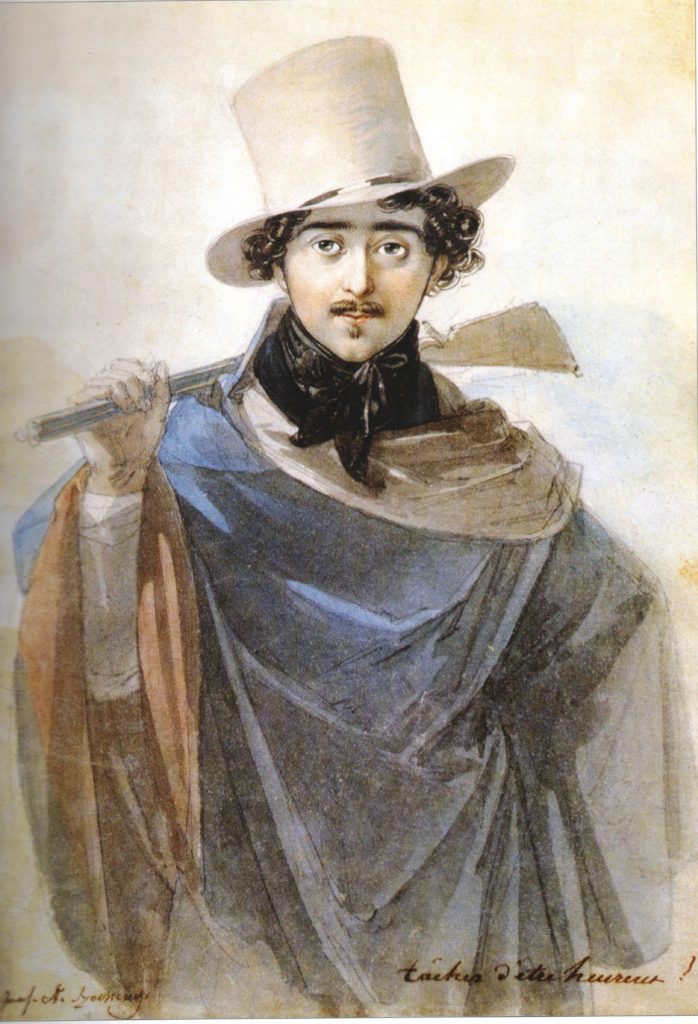
First as a soldier during the Napoleonic Wars, Széchenyi followed his interests and travelled across much of southern and western Europe. It was during his travels that he first showed the intellectual openness and flexibility that later made his work so diverse. His first trip was to England in the autumn of 1815. In addition to English social customs and political culture, the achievements of technical modernisation had the greatest influence on him during the three months he spent there. The first trip to England was followed by five more over the next two decades. His experiences in the island state left their mark on Széchenyi’s oeuvre and even on his daily life and personal environment. He regarded the English constitutional system as a political ideal. Much of his practical activity had some connection with England.
In 1829 he travelled widely in the Bohemia, Germany and the Netherlands. He constantly compared his experience of a more advanced agriculture and a more civilised society with conditions in Hungary, and the comparison rarely filled him with pride.
He became thoroughly acquainted with Italy both as a soldier and as a traveller. He was fascinated by the landscapes of the peninsula, and its historical and cultural monuments. The personalisation of his religiousness is mainly linked to his experiences in Italy.
In France, he was struck by the values of culture and economic performance, but also by the national pride that the French exude, combined with a sense of action.
In 1818–19, inspired by his scientific interests and literary experiences, Széchenyi travelled extensively in the Aegean Region, Greece and Asia Minor in the Ottoman Empire. He read a warning in the backwardness and stagnation of civilisation of the peoples living under the declining Ottoman rule: his country must follow the modernisation patterns of Western Europe.


