
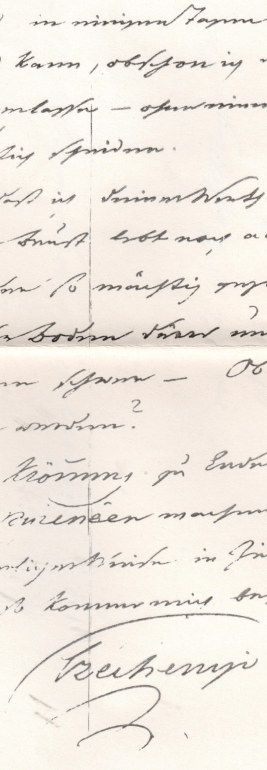
The letter states that János Puskovits is failing to fulfil his obligations regarding labour and payment, even though he is able to do so. He therefore instructs Liebenberg to enforce payment of the debt by means of execution if necessary. He continues to allow him to redeem his labour with money, but only on condition that he pays 6 forints in advance each year; otherwise, he must be compelled to perform compulsory labour.
Bétsb. 5a Aug 1819
459
Kedves Jo Uram![a]
Puskovits János eránt tett Relatiojábol[1] az Urnak meg értvén azt, hogy eö engedelmemmel visza élvén se a Robotjának meg Váltásáért járo pénzt fizetni nem akarja, sem Robotot nem tesz, azonban pedig még mind erejére mind pedig mesterségének űzésére és vagyonyára nézve is jo állapotban vagyon, azért az Ur rajta ha máskép nem lehet, Executioval is, a kárát ki becsültetvén, a Restantiát[2] meg venni igyekezzen, eö nékie ezután is a Robot alol 12 esztendönként fizetendő forintal leendö fel váltását, olly moddal meg engedvén, hogy minden esztendönek elején 6 ftot anticipálni[3] tartozon, a mit is ha el mulasztana, és a fizetésben nyakaskodna, azonnal a Robotolásra okvetetlenül szoritassék.
Széchényi[4]
[1] Latin: proposal.
[2] Latin: arrears.
[3] Latin: advance.
[4] Only the signature and the last sentence are in his own handwriting; the letter was written by Antal Pigay, Ferenc Széchényi’s secretary.
[a] In this and the previous few letters, Széchenyi continues the economic correspondence with his livestock manager in place of his ailing father. The numbers preceding each item repeat the numbers of the minutes of the farm to make it easier to follow.
Recommended reference:
István Széchenyi to János Liebenberg, Vienna, 5 August 1819. Edited and annotated by Szilvia Czinege. Published in Correspondence of István Széchenyi. Digital edition. Edited by Szilvia Czinege and Zoltán Fónagy. https://szechenyilevelezes.abtk.hu/ Abbreviation for further references: SzIL-Digit.